Commercial Mold Remediation in Wellington Estates, IN
Mold remediation across central Indiana gets planned around occupied floors and the tenant schedules inside them.
For Commercial Mold Remediation in Wellington Estates, IN, Wellington Estates Water Restoration starts with a scheduled certified assessment and a scope in writing, no work begins without your approval. Call (765) 978-5086.
- Service: Commercial Mold Remediation for Wellington Estates homeowners
- Service area: Wellington Estates, IN and surrounding areas
- Response time: Scheduled evaluation at your convenience, typically same week
- Licensed and insured (License #RC21100059)
- Serving Wellington Estates, IN since 2018
Commercial Mold Removal in Wellington Estates
For commercial buildings in Wellington Estates, we'll track down the water feeding mold growth before any material comes out.
Moisture Sources Here
Buildings near the White River and Morse Reservoir can take on floodwater, and anything left wet afterward can grow mold. We'll go over the air handling and any past leaks on the first walkthrough with whoever runs the building.
We take commercial mold jobs anywhere in Wellington Estates, including the streets around the Hamilton Town Center. We also handle commercial mold work in Fishers, Sheridan, Cicero and Westfield.
Commercial Mold Remediation for Wellington Estates Businesses
Turning over a vacant suite is the cheapest time to deal with this and the easiest time to miss it. The space has been closed up, the HVAC has been running at a setback that lets humidity climb, and the back of the demised wall has been damp all summer. Wellington Estates Water Restoration inspects Wellington Estates suites before build out starts, so growth gets remediated while the walls are already open, before a new tenant moves in.
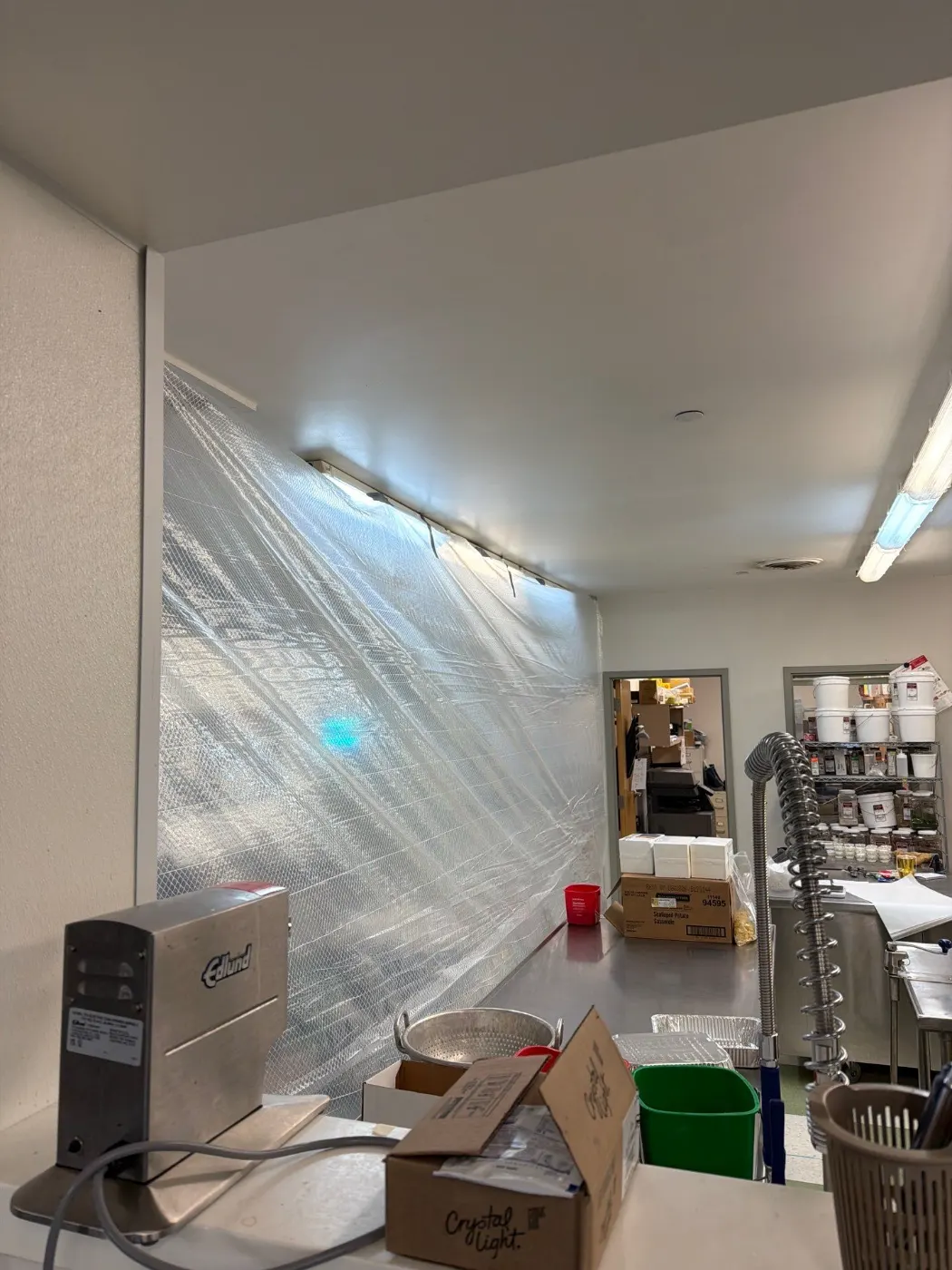
After affected material comes out, every surface inside the enclosure gets HEPA vacuumed and wiped, including framing cavities, structural steel, concrete and the floor. Wellington Estates Water Restoration keeps the air scrubbers running through that phase in your Wellington Estates building, because the cleaning is what any verification sampling will measure. Containment stays up until that work is done and checked.
On floors that stay open, containment moves from zone to zone. Wellington Estates Water Restoration builds the first enclosure around the area with the most growth in your Wellington Estates building and finishes the full sequence inside it before the barrier moves to the next section. Each zone keeps its own readings and photographs, so the file shows where every part of the floor stood.
Wellington Estates Water Restoration keeps the remediation, the source correction and the rebuild on separate lines, so you can see what each part costs in your Wellington Estates building. The team assembles the readings, photographs, scope documentation and verification reports as the work progresses, and you decide with your carrier and your broker how to use them. Any revision comes with photos and readings.
Before anyone paints over the stain or swaps the ceiling tile and moves on, call Wellington Estates Water Restoration. Covering the surface leaves the damp material and the water behind it in place. An inspection of your Wellington Estates property finds out what's under the finish before another coat or another tile goes up.
Signs You Need Commercial Mold Remediation
If you notice any of these in your Wellington Estates building, schedule a free inspection before the issue worsens.
Carpet tile edges curling or staying damp along an exterior wall for days at a time
Dark staining along the caulk line behind a janitor sink or restroom fixture
Ceiling tiles with staining on the back side that only shows when you lift one out of the grid
Ceiling tiles bowing in the middle of the span after a week of heavy rain
Rust or corrosion along the bottom track of metal studs where a wall has been opened
Vinyl wall covering bubbling or peeling at the seams, usually worst near the base
Lower level carpet or drywall that stayed wet for days after storm water came in at a door
Relative humidity in the space that stays high even with the mechanical equipment running normally
Pipe insulation above the ceiling that's wet or hanging loose from a chilled water line
Door frames and wood casing that have swollen and stained near an exterior entry
How Wellington Estates Water Restoration Handles Commercial Mold Remediation
We follow these steps in order on every Wellington Estates job.
Initial Call and Access Planning
You describe what you're seeing and Wellington Estates Water Restoration asks about the building: occupancy, access rules, who holds the keys and whether anyone has opened the area. That conversation sets up the inspection around your schedule.
Inspection and Moisture Survey
Crews walk the affected area with thermal imaging and penetrating moisture meters, lift ceiling tiles where readings justify it, and open small inspection ports in wall assemblies. The survey defines the real boundary of the growth and identifies where the water is arriving from.
Stopping Active Water
If water is still arriving, stopping it comes before anything else. The crew works with the building engineer to find the valve or penetration involved, then controls it temporarily so the area stops getting wetter while the scope is written.
Contents and Finish Protection
Furniture and equipment inside the work area get photographed, then moved out or wrapped. Floors and finishes along the haul route are covered, so the rest of the building stays protected while the work runs.
Independent Verification
Where a building owner, carrier or tenant agreement calls for it, an outside industrial hygienist performs post remediation verification with a visual inspection and whatever sampling their protocol specifies. Containment and equipment stay in place until that party signs off on the results.
Commercial Mold Remediation in Wellington Estates
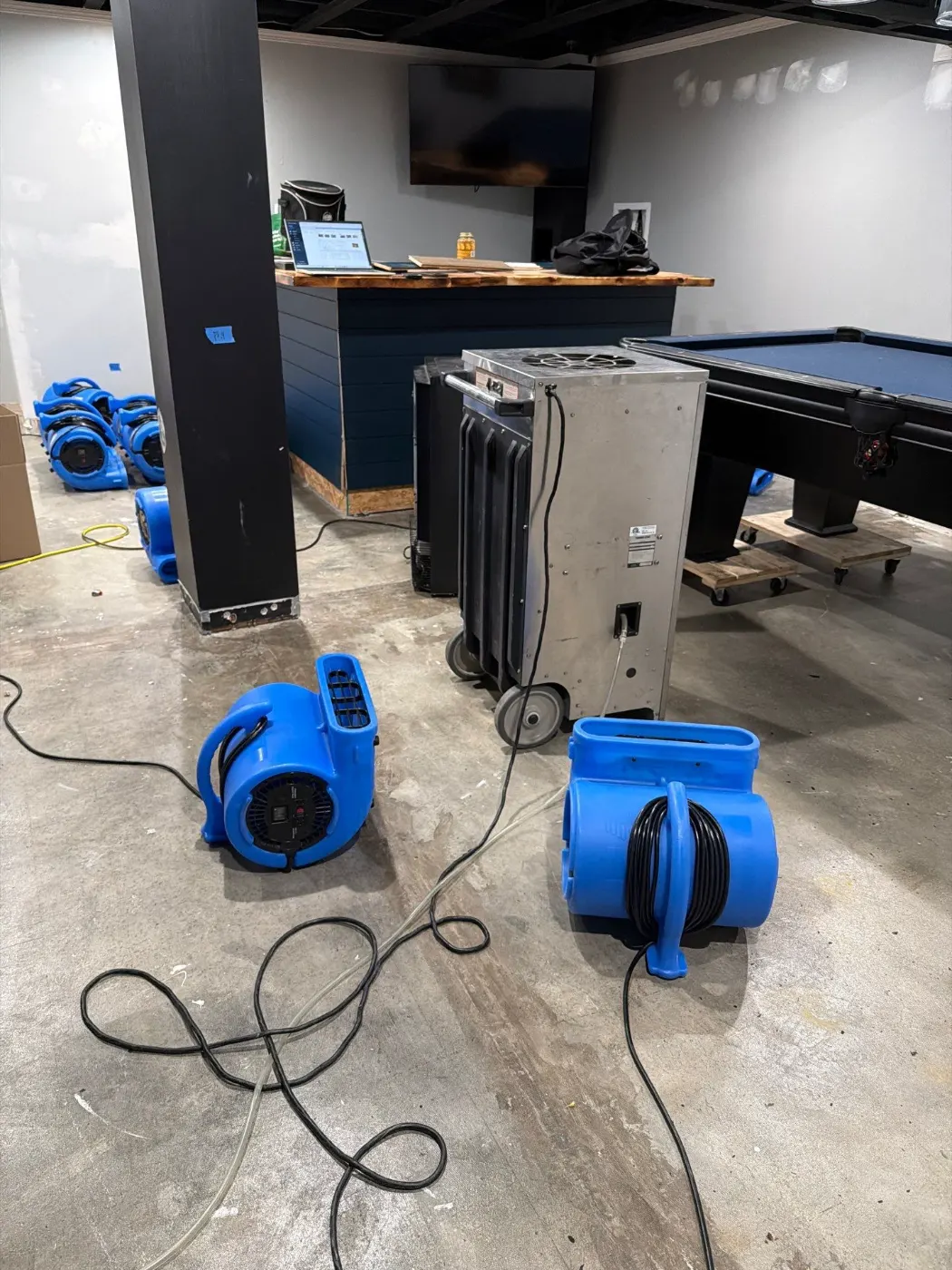
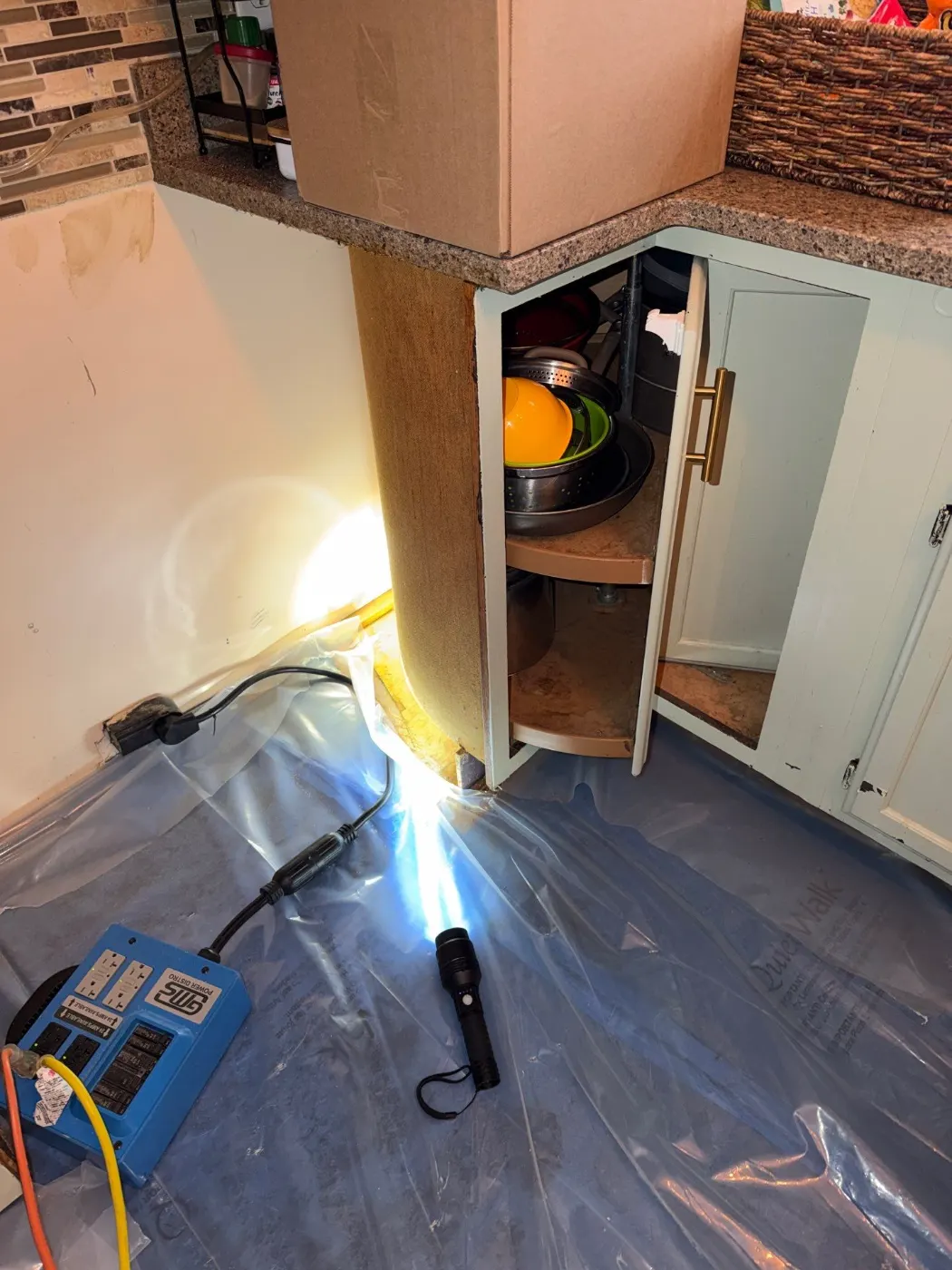
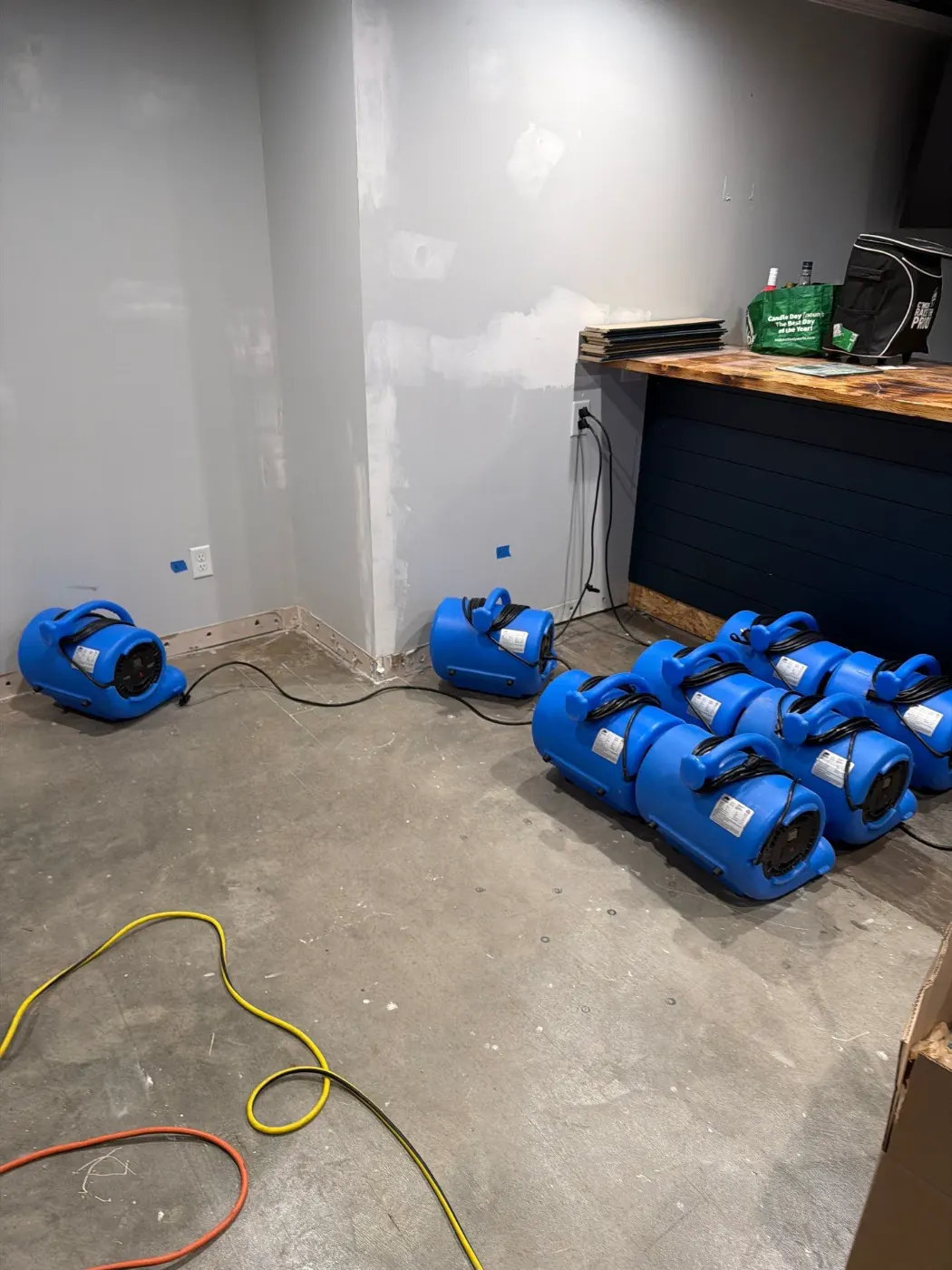
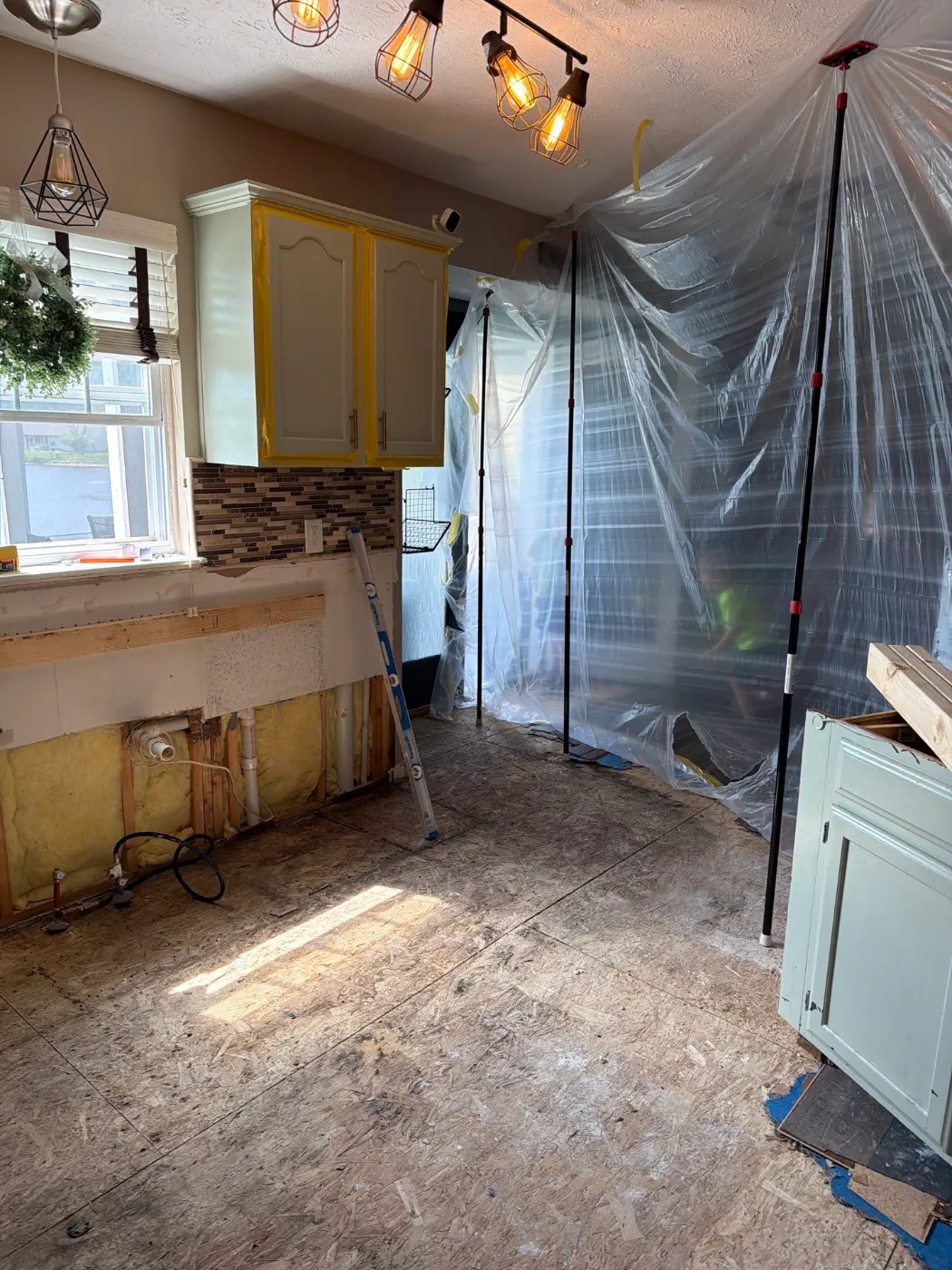
Photographs from real commercial mold remediation jobs completed by our crew in Wellington Estates and surrounding areas.
Commercial Mold Remediation FAQ
Questions Wellington Estates property managers ask us about commercial mold remediation.
Guidance and Standards for Commercial Mold Remediation
- The ANSI/IICRC S520 is the published standard for professional mold remediation. The current edition is the Fourth Edition, 2024. IICRC S520 Standard
- EPA’s mold guide says the key to mold control is moisture control. EPA: A Brief Guide to Mold, Moisture and Your Home
Wellington Estates Neighborhoods We Serve
We take commercial mold remediation calls in every part of Wellington Estates. Pick your neighborhood for local details.
Other Restoration Services in Wellington Estates
Wellington Estates Water Restoration handles the full scope of restoration work. Explore our other services below.
Water Damage Restoration in Wellington Estates
24/7 emergency response. IICRC certified water restoration from extraction to full dry out.
Learn more →Basement Flooding in Wellington Estates
Basement water emergencies handled fast. Extraction, drying, mold prevention.
Learn more →Sewage Cleanup in Wellington Estates
Category 3 biohazard cleanup. Full containment, decontamination, structural restoration.
Learn more →Request Commercial Mold Remediation
Reach Us Directly
Our team is available 24/7 for emergencies and ready to schedule inspections during business hours.
Need Immediate Help?
For active water or mold emergencies, call us directly. We are available 24/7.